Electrical Engineering Innovations for Expanding and Upgrading Pharma Facilities

Expanding and upgrading pharmaceutical facilities requires careful planning and precise execution, especially when it comes to electrical engineering. The electrical systems in these facilities must meet strict safety standards, support complex equipment, and ensure uninterrupted power to maintain product quality and compliance. This post explores key electrical engineering approaches and technologies that help pharma companies expand and modernize their facilities efficiently and safely.

Designing Electrical Systems for Pharma Facility Expansion
Pharmaceutical expansions often involve adding new production lines, clean rooms, or storage areas. Electrical engineers must design systems that integrate seamlessly with existing infrastructure while allowing future growth. Key considerations include:
Power capacity and distribution: Upgrades often require increasing power supply capacity. Engineers calculate load demands for new equipment and design distribution networks that minimize voltage drops and ensure balanced loads.
Redundancy and reliability: Pharma facilities need continuous power to avoid costly downtime. Electrical designs incorporate backup generators, uninterruptible power supplies (UPS), and automatic transfer switches to maintain operations during outages.
Compliance with regulations: Electrical systems must comply with standards such as NFPA 70 (National Electrical Code) and FDA guidelines for pharmaceutical manufacturing. This includes proper grounding, explosion-proof equipment in hazardous areas, and electromagnetic compatibility.
Using modular electrical panels and scalable wiring systems helps accommodate future expansions without major rewiring.
Integrating Advanced Automation and Control Systems
Modern pharma facilities rely heavily on automation for precision and efficiency. Electrical engineers play a crucial role in integrating control systems that manage production processes, environmental conditions, and safety protocols.
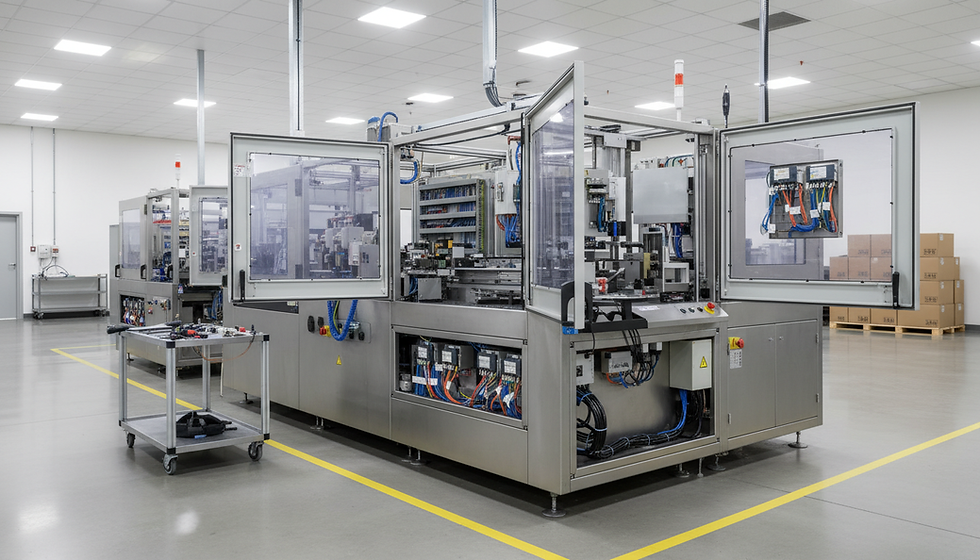
Programmable Logic Controllers (PLCs): PLCs control machinery and monitor sensors. Upgrading to newer PLC models with enhanced processing power and communication capabilities improves responsiveness and data collection.
Building Management Systems (BMS): BMS monitor HVAC, lighting, and power usage. Integrating electrical systems with BMS enables real-time energy management and environmental control, critical for maintaining clean room standards.
Remote monitoring and diagnostics: Networked electrical systems allow engineers to monitor equipment status remotely, detect faults early, and schedule maintenance proactively.
These control systems reduce human error, improve product consistency, and support regulatory compliance through detailed record-keeping.
Implementing Energy-Efficient Electrical Solutions
Energy consumption is a major operational cost for pharmaceutical facilities. Electrical engineering upgrades provide opportunities to reduce energy use while maintaining performance.
LED lighting: Replacing traditional lighting with LED fixtures lowers energy consumption and reduces heat generation, which helps maintain controlled environments.
Variable frequency drives (VFDs): VFDs adjust motor speeds based on demand, reducing energy waste in pumps, fans, and compressors.
Power factor correction: Installing capacitors improves power factor, reducing reactive power charges and improving electrical system efficiency.
Energy monitoring systems: Real-time tracking of energy use identifies inefficiencies and supports continuous improvement.
Energy-efficient electrical designs contribute to sustainability goals and lower utility bills without compromising facility operations.

Ensuring Safety and Risk Management in Electrical Upgrades
Safety is paramount in pharmaceutical environments where electrical faults can cause fires, contamination, or equipment damage. Electrical engineers implement multiple safety measures during expansions and upgrades:
Hazardous area classification: Identifying zones with flammable materials and installing explosion-proof electrical equipment prevents ignition risks.
Ground fault protection: Ground fault circuit interrupters (GFCIs) detect leakage currents and shut off power quickly to avoid shocks or fires.
Surge protection: Protecting sensitive equipment from voltage spikes extends equipment life and prevents data loss.
Regular testing and maintenance: Electrical systems undergo routine inspections, insulation resistance tests, and thermal imaging to detect potential issues early.
Training facility staff on electrical safety protocols complements engineering controls and reduces accident risks.
Case Example: Upgrading a Biopharma Facility’s Electrical Infrastructure
A mid-sized biopharmaceutical company expanded its production capacity by adding two new clean rooms and upgrading its HVAC system. Electrical engineers designed a new power distribution system with the following features:
Increased transformer capacity from 500 kVA to 750 kVA to handle additional load.
Installation of a redundant UPS system to support critical control panels.
Integration of a centralized BMS for lighting, temperature, and humidity control.
Use of LED lighting and VFDs on HVAC motors to reduce energy consumption by 20%.
The project was completed with minimal downtime, and the facility passed all regulatory inspections without electrical compliance issues.
Planning for Future-Proof Electrical Systems
Pharma facilities must remain adaptable to evolving technologies and regulatory requirements. Electrical engineers recommend:
Designing flexible wiring and conduit layouts for easy modifications.
Using open communication protocols like Ethernet/IP or Modbus for control systems.
Incorporating scalable power and control panels.
Planning for integration of renewable energy sources or energy storage systems.
This approach reduces costs and complexity when future expansions or upgrades become necessary.


Comments